ISR Swim Lessons – The F.L.O.A.T. Method by Goldfish Swim School™
For many parents, introducing a child to the water is both exciting and a little nerve-racking. Children Swimming Resource (ISR) swim lessons through the F.L.O.A.T. Method offer a signature starting point, helping children become familiar with floating and basic movement in the water. These early lessons at Goldfish Swim School focus on calm, guided practice so babies can begin building comfort while parents watch their little swimmer gradually get used to the pool in a relaxed, child-focused setting.
What Are ISR Children’s Swim Lessons?
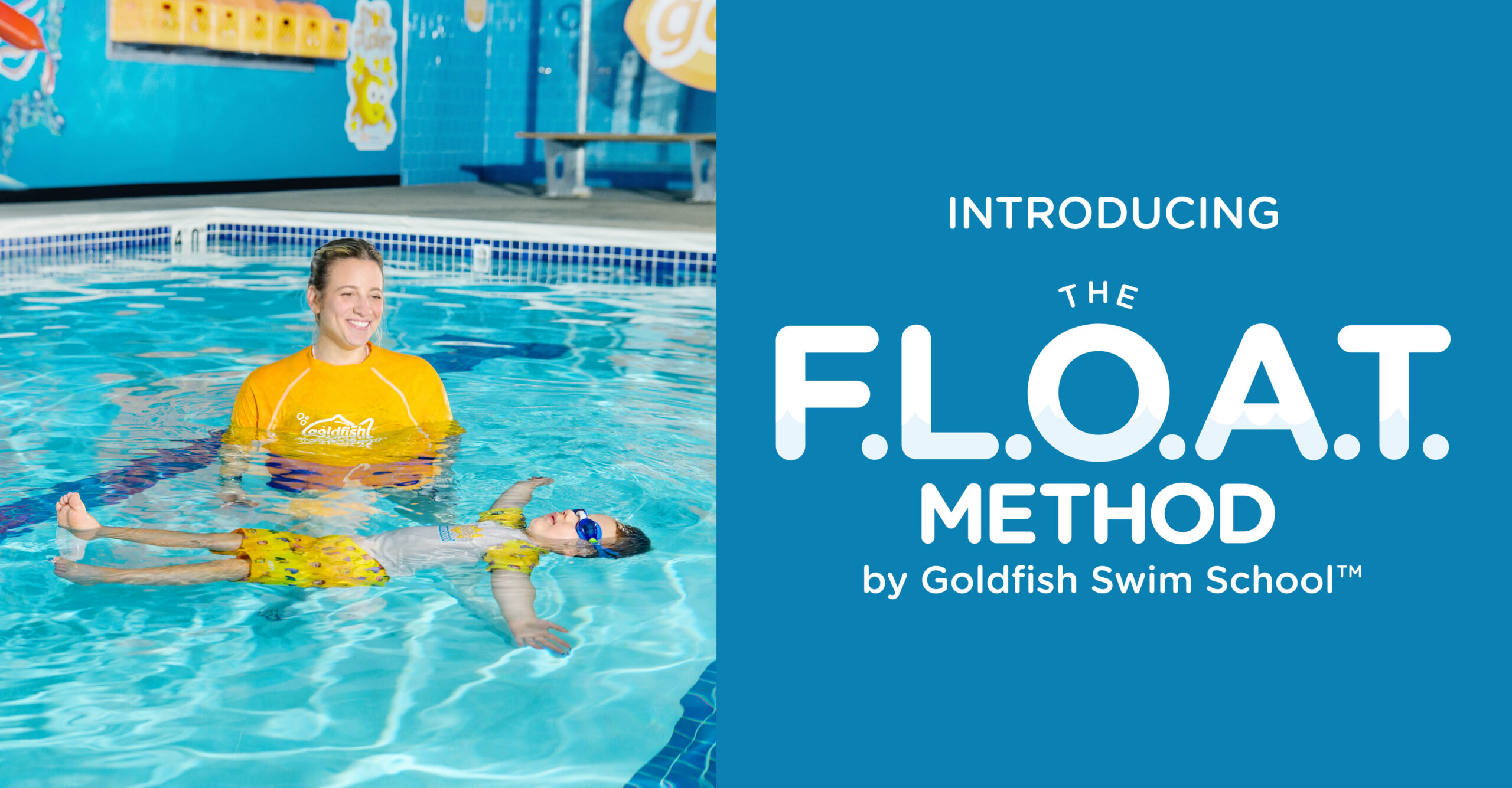
ISR children’s swim lessons introduce babies to early water safety skills through guided floating and supported movement in the water. Using the F.L.O.A.T. Method, teachers help children become familiar with back floating, body positioning, and breath awareness in a calm, supportive environment.
These lessons focus on short, structured sessions that allow babies to gradually build comfort in the water while staying relaxed and engaged. Starting swimming lessons early helps children develop familiarity with the water while learning foundational safety skills at their own pace.
Skills Babies Learn in F.L.O.A.T. Lessons
F.L.O.A.T. lessons help children develop early water awareness and comfort through simple, guided techniques. These foundational skills are often associated with children’s rescue swimming and children’s survival swim concepts, introduced in a signature, age-appropriate way. During lessons, teachers support children as they practice:
- Floating on their back
- Maintaining a calm, relaxed body position
- Recognizing body orientation in the water
- Developing early breath awareness
These skills are introduced gradually in a supportive environment, helping children build confidence while becoming more comfortable in the water.
How the F.L.O.A.T. Method Differs From Traditional Swim Lessons
The F.L.O.A.T. Method by Goldfish Swim School™ focuses on early floating awareness rather than stroke development, making it different from traditional swim instruction for older children.
Key differences include:
- Early skill focus: Traditional programs often introduce kicking and stroke movements first, while this method emphasizes floating control early.
- Children-specific pacing: Lessons are structured around short, supportive repetitions appropriate for young children.
- Safety-centered instruction: Lessons emphasize body orientation and floating responses rather than traditional swim strokes.
As children grow and develop stronger coordination, they can transition naturally into preschool swim lessons and later intermediate swim lessons.
Water Safety Classes in a Controlled Environment
Water safety classes provide a calm, structured environment where children can begin building comfort in the water. In a warm pool, teachers guide each child through structured, repeatable movements that support floating, body awareness, and early safety skills.
Each lesson is designed to feel predictable and reassuring, helping children stay relaxed while gradually becoming more familiar with the water.
When you feel ready to introduce your child to the water, explore class options or connect with your local Goldfish Swim School team to learn more. You can also schedule a free swim skills assessment to find the best starting point for your child.
FAQs About The F.L.O.A.T. Method by Goldfish Swim School™
Parents often have questions when introducing their children to ISR swim lessons. Here are a few helpful answers to guide you.
At What Age Can a Child Start Survival Swim Lessons?
Many children can begin ISR swim lessons early, depending on their developmental readiness. Lessons typically start with short, structured sessions that introduce floating and water familiarity in a supportive setting. The F.L.O.A.T. Method requires children to be at least 12 months old upon enrollment to ensure the curriculum aligns with their development.
How Do Water Safety Classes for Children Teach Independent Floating Skills?
Teachers guide children into supported floating positions while encouraging calm, relaxed movement. Through repetition and verbal cues, children begin to understand balance and body positioning in the water.
Are ISR Swim Lessons Safe for Children Under One Year Old?
ISR swim lessons are designed to progress slowly with close teacher supervision. Lessons remain short and carefully guided to help babies stay comfortable throughout the learning process.
How Do Teachers Help Children Stay Calm While Learning to Float Independently?
Teachers use consistent cues, adaptive positioning, and patient repetition to create a calm and predictable learning environment. This helps children feel secure while practicing new skills.
What Should Parents Expect During a F.L.O.A.T. Method Water Safety Class?
Parents can expect short, structured lessons focused on floating, comfort, and early water safety skills. Lessons are designed to be supportive and gradual, helping children build confidence in the water over time.
More Posts Like This